
'The Odyssey' toys with the Bronze Age's original sin
How Nolan updates the Homeric poem with ancient (and modern) relevance

Pre-P.S.: Follow The Usonian’s new IG page! @theusonian. The Achaeans thank you in advance.
Few films have been as highly anticipated as Christopher Nolan’s take on The Odyssey. (Spoilers below, so don’t read if you want to get spoiled on a 3,000 year-old poem.)
It’s territory that the elite director has been circling for a while. He was attached to direct Troy (2004) but traded the project with Wolfgang Petersen for the Batman reboot that evolved into Batman Begins, the start of the trilogy that made Nolan’s career.
I have to admit I was skeptical. In the casting, Matt Damon struck me as too modern (he excels in roles from 1930s to now, but no earlier1) to play Odysseus.
And the film’s first half hour, with its Oppenheimer-style expositional dialogue, which conspicuously feels out of time and place, seemed to confirm my suspicions.
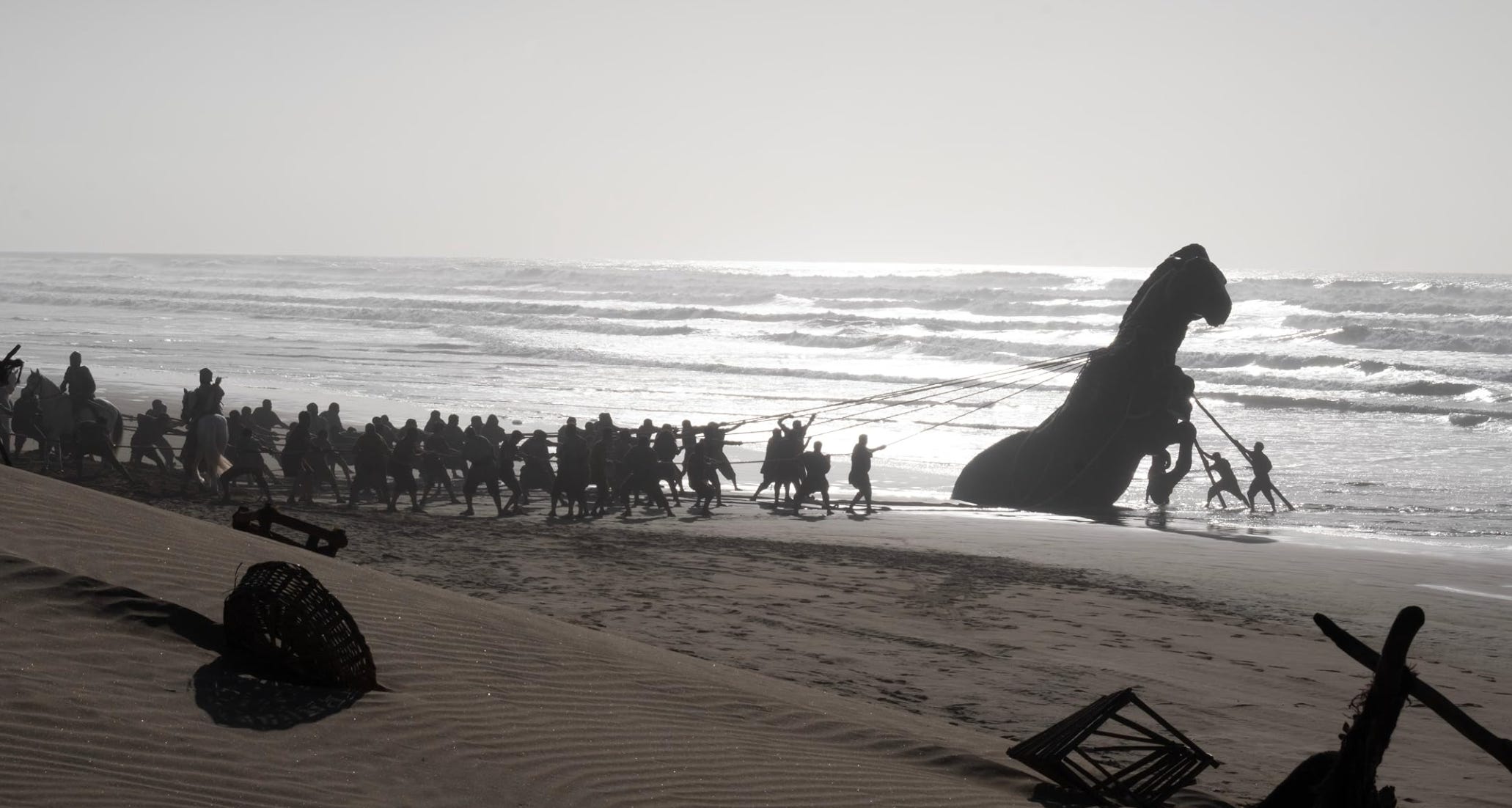
And while ostensibly an adaptation of Emily Wilson’s 2017 feminist translation of The Odyssey (it is in the sense that female characters like Penelope, Circe, and Helen are more developed), the film’s more interesting contribution is how it weaves in what was actually going on during the end of the Bronze Age. Rather than glorify Odysseus’ ingenius role in the Fall of Troy, Nolan casts it, more modernly, as an act of horror, an original sin that leads to the fall of an age.