
The Architect and the Animal
How animals have inspired architecture, as seen in Kostas Tsiambaos' new book

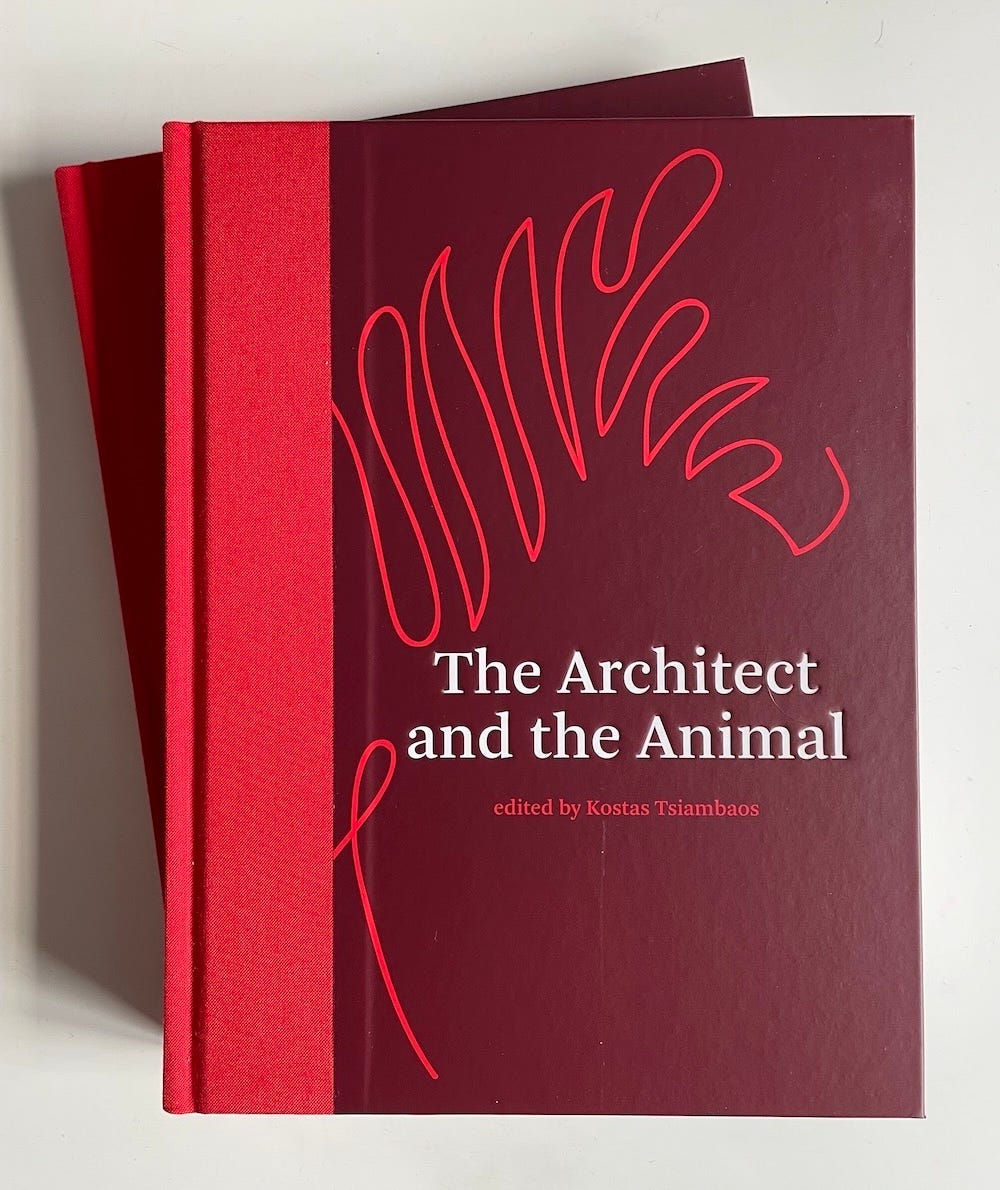
In each installment of “The Usonian Interviews,” The Usonian spotlights a storyteller from a different corner of the globe. This week, The Usonian speaks with architectural historian Kostas Tsiambaos about his new essay anthology, The Architect and the Animal (MIT Press, 2025). Structured as a whimsical “abecedarian” collection of essays, in which each letter of the alphabet prompts a short essay about an animal and its place in the imagination of a noteworthy architect, The Architect and the Animal is an engaging collection that reexamines how animal images and biological forms have entered the imagination of modern architects. Since the dawn of modernism, the conventional narrative states that architects have drifted away from ornamentation of animals in support of a house as “a machine for living,” but Tsiambaos’ book, featuring contributions from 26 different architectural historians and experts, reveals that animals have never been too far from the mind of even the most forward-thinking modernists.
You can order the book directly from MIT Press, Penguin Random House, Bookshop, and Amazon.
This interview has been edited for clarity and length. The views presented by the interview subject are the opinions of the subject and do not represent the views of the article’s author or this newsletter. Browse the full interview archive here.
THE USONIAN: In the acknowledgments, you mention that this book came out of research you were doing on animals in modern Greek architecture during your fellowship at the Princeton Seeger Center for Hellenic Studies. What drew you to the subject of “The Architect and the Animal?”
KOSTAS TSIAMBAOS: It started with my work on this Greek architect, Dimitris Pikionis, who’s one of the most important architects in 20th century Greece. And because a considerable part of my research, including my Ph.D. and part of my postdoctoral research, was focused on Pikionis’ work, I knew that he often referred to and represented animals in his work—not only in his buildings, but also in many of his texts, drawings, and sketches.
I also had in mind architects like Le Corbusier who made multiple references to animals in his work. He identified himself with “the crow,” but other times he was identified as a donkey or dog.1
Why did these important architects have this interest in animals? What is the argument they’re trying to make? And what makes it even more interesting is the fact that we’re talking about some of the most important architects of the 20th century. The most interesting and creative public intellectuals like Le Corbusier or Pikionis have this interest in animals.
Unlike previous eras in architecture, when animals were always present, in modern architecture animals seem to disappear. Go back to Göbekli Tepe, in Turkey, considered the first monumental architectural construction (5,000 years before Stonehenge), representations of animals were found everywhere at that site, but they gradually disappeared from the architecture of the 20th century.
The research that I did as a visiting fellow at the Princeton Seeger Center2 was focused on Greek architecture, but I already had in my mind that I wanted to extend it to a global history of animals in architecture, and the academic resources and the colleagues available at Princeton were an ideal environment for such a project.
TU: In the introduction, you explain the idea of the book through the example of Noah’s ark as envisioned by Diderot and d’Alembert’s Enlightenment-era Encyclopédie—a piece of architecture, the first (at least in various religious traditions) designed specifically to house animals. How does your abecedarian book of essays resemble the ark, and in which ways does it differ?
KT: It’s true that few theorists of architecture have written about Noah’s ark in general and Noah’s ark in the Encyclopédie in particular, even since the 19th century. For example, architects like Joseph Gandy had written that the ark is the origin of architecture in general, because it was the first architectural construction of the new world after the flood.
One thing that I found interesting about the ark as it was depicted in the Encyclopédie is the ark’s abstract form, which is also almost like a simple 3D grid. And this grid expresses this kind of rational formality related to the Enlightenment, in contrast with the freedom of the nature which surrounds it, which is also represented by the trees, the sea, and the mountains, as well as the animals that inhabit the ark. The fact the animals are inside this kind of rational grid suggests to me that their protection is also a kind of detention, or a kind of disappearance from the world.
In other words, it’s not a coincidence that animals gradually disappeared from architecture since modernity, because animals were all over architecture in ancient Mesopotamia, in Egyptian and Greek temples, in Hindu shrines and Gothic cathedrals, but they’re missing from the modern design.
However, I also realized that they’re not completely missing from modern or postmodern architecture. They’re just not in plain sight. Of course, they’re not appearing as ornamentation on buildings. But they are everywhere as references and representations, despite the prevailing belief that modern architecture was related to the machine and not to the animal.
But no matter how much we as architects want to be rational, factual, and have everything under control, there are important aspects of architecture that we cannot explain or cannot control. Very often, these are architecture’s most interesting aspects.

TU: How did you assign the specific animals, some mythic and real, some extinct and abstract, to the particular contributors?
KT: That was the most challenging part of the work. To create this abecedarian was challenging. Initially, I had in mind some specific architects, animals, and case studies of animal representations, references to animals in various texts by architects—and often more than one animal per practice.
For example, Superstudio represented many animals in their work, and even wrote about animals, cows, horses, tigers, and baboons. Architects like John Hejduk also represented many animals in their projects, whether sketched or included as mythical/imaginary animals; he had even illustrated a book of Aesop’s Fables. I had also read some texts by architectural historians who had written something about an architect and an animal as part of a case study.
So my initial proposal to Thomas Weaver, then the art and architecture acquisitions editor at MIT Press, was for a more traditional book, with 10 chapters by 10 authors. Now Thomas, who had a huge experience as an editor of the AA Files, the Journal of the Architectural Association in London, and sent me more case studies of architects and animals over the years and he finally proposed that we make an abecedarian with 26 architects and 26 animals. We were almost at 26, so why didn’t we give it this form?
It proved to be a very challenging and demanding task, and almost impossible in some aspects. We had to be imaginative and inventive, and match the right authors, animals and their letters. We had to find an architect who writes or represents a specific animal, and together with other animals, make a continuous queue. And this is why it took me almost four years to complete this project. So it was complicated, as every book project is, but specifically it was complicated because of this decision to make it as an abecedarian.
TU: The essays themselves are all sort of trifles, with just enough time to sketch out a concept to inspire thought without overstaying their welcome. Was this part of your intent, or how did it end up that way?
KT: Since we agreed that this was going to be a book with 26 chapters, they had to be shorter. Each chapter would start from one illustration—just one sketch, a drawing, a collage, or a photograph. And this image would trigger the discussion and would pose the question about the purpose or intent behind the animal in the image.
After the author explains the context of each one of these visual artifacts, the text opens to more theoretical directions regarding the specific architect.
I really appreciated structure as an editorial concept in Tom Weaver’s approach. Particularly, I appreciated the value that he attributed to the quality of writing. He was always telling me that what is more important is to invite people who are good writers, have interesting ideas and can write an interesting text.
Of course, all of the contributors are distinguished professors in very well-established schools all over the world; they are also good writers. In the last few years, I had been experimenting with this hybridity between architectural history, fiction and narrative; I also believe that writing is important to the promotion of architectural history. Now, I’m more and more persuaded by this because artificial intelligence can produce traditional adequate academic writing. Many academic journals would publish something that is produced by AI, and nobody would know. So what is left for us?
Architectural historians must find other ways, themes, topics and new ways of writing. So this book not only focuses on the fresh theme of architecture and animals, but it proposes a way of writing that is less formal and more playful, less explanatory and more inviting and addressed to a wider public.
It was very important to me to have a book that someone who is not an architect or historian could read—instead, any person who has many interests would enjoy reading it.
TU: Your own essay on the Vulture in regards to Dimitris Pikionis’ Church of Saint Demetrius, I found very interesting. How does the vulture (and I guess we are actually talking about the eagle) figure its way through antique Hellenic, Roman, and finally modern Greek architecture?
KT: In the case of Pikionis, he does not really explain which animal he represents. Of course, the eagle is the common symbol for many architectures and for many cultures and civilizations, especially the Romans and the Christian Byzantines. And the eagle is related to the etymology of the Greek word for the gable, which is aétōma, aetós being the eagle in Greek. However, what Pikionis draws looks more like a vulture than an eagle because of the bird’s bald head. In my opinion, he intentionally did not want to be precise. Of course, the eagle is important as a cultural symbol for Greece as the symbol of the god Zeus.
But the vulture is also important. And in antiquity, the word vulture had multiple meanings, so it meant both what we call the vulture and the eagle today. In some cases, the vulture is often mentioned as the bird that Zeus sent to eat Prometheus’ liver, but it could also be an eagle.
There is an ambiguity, and I remembered that as I was writing this chapter. But to make it short—in the end, I had to find an animal starting from “V,” and “vulture” was convenient.

TU: I won’t hold it against you, but your book also takes some liberties with the alphabet, choosing King Cobra for “K”, “Queen Bee” for “Q” and “X-tinct Dodo” for “X.” Are you telling me there wasn’t an animal that actually started with “X?”
KT: Actually, there are very few animals that start from “X” or “Q” or but the thing is that there’s none that appear as a reference or representation in the architecture of the 20th century, at least that I’m aware of.
This is a book about animals in architecture, and not animals in general. One of the anonymous reviewers, I would guess that they were not an architect or an architectural historian, they made the point that a unicorn is not an actual animal, or that the word dog is vague because it describes many different breeds of dogs that are very different from one another, etc. For example, Manuel Orazi, who wrote about Yona Friedman and the unicorn, explained that the unicorn was really important to Yona Friedman. He had produced many drawings and paper figures of unicorns. He had described a land called “Unicornia,” etc. So if there is this fantastic animal that is that much important for an architect like Yona Friedman, it had to be in the book. I would also struggle to convince my three-year-old son that the unicorns aren’t real.
TU: Some of the animal motifs and the architects they describe feel immediate—the crow and Le Corbusier (and as M. Christine Boyer reveals, the ass), the nautilus and Frank Lloyd Wright in reflection of the Guggenheim design, Aldo Rossi and his dead horses, Rem Koolhaas and the giraffe. Others dig up stories that feel quite obscure—like Eduardo Iglesias and the fish in related to the history of canneries, the “polochon” pig-creature created by Lina Bo Bardi. As an editor, what were you looking for to guide this kaleidoscopic quest to understand how animal forms have inspired architects?
KT: Most of the books on animals in architecture or in architectural history see animals as formal inspirations. So the form of animals, or sometimes the form of the constructions that animals do, become formal inspirations for architecture. Of course, I included some prominent examples, like Frank Lloyd Wright’s Guggenheim Museum.
But in general, my intention was to go beyond this formalistic approach. So even in these cases where there is an obvious formal analogy, authors explain how there are also other meanings. There are various esthetic, social, cultural, ethical, and even environmental issues. Lina Bo Bardi is a great example, because she produced this kind of imaginary pig, the “polochon,” which has an actual formal presence that is very intense with its form, its color, its two heads or two tips. But there are also a lot of things that one can discuss in relation to Brazil—the wild, the surreal, the cannibalistic, even in the meta-colonial framework that Martín Cobas poses in his chapter.
For example, the horse in the case of Aldo Rossi, is a kind of formal influence. I can imagine Rossi admiring the form of the skeleton of the horse, but at the same time, it is something that opens a discussion about the symbol and its power. I had recently read All the King’s Horses by Indra Kagis McEwen, which actually focuses on the horse as a symbol of Italian Renaissance and as an imperial symbol generally, and how it was almost necessary for artists and architects in the 15th and the 16th century to represent the horse as this official representative of power, carrying a cultural burden that goes back to ancient Rome. So from ancient Rome and Vitruvius to, Renaissance-era Florence and Alberti, the horse is a constant symbol, and not just a beautiful form.
TU: What surprised you the most about the research from this project? What did you learn? What do you want to uncover next?
KT: I was surprised to see how little has been written about this subject, which proved to be so interesting and productive and multivalent.
A few weeks ago, I sent the final manuscript of a second, more traditional book on the subject to be published by Routledge later this year. But it’s interesting that what we called “critical animal studies” are everywhere in the humanities, in art history, in philosophy, in cinema, and critical theory. This is a topic which is very hot in the last 15 years or so, but in the history and theory of architecture, few books have been published. There are a lot of things left to be said and written about this topic.
Another thing that I also find interesting—and there are also very few things mentioned about this—is how animals serve as a kind of a machine in architectural construction. Of course, we know that animals were always used in architectural construction. Since prehistory, builds have used animals to lift weights with various technologies, but animals were used also in 20th century construction sites. So this discussion—involving an examination of animal labor, energy consumption, animal rights in architectural history—would be very important.
Societies who have idealized animals are at the same time societies who have exploited their power the most. One would argue that this is the same for us humans as well. I believe that a discussion on animals is always a discussion about humans.
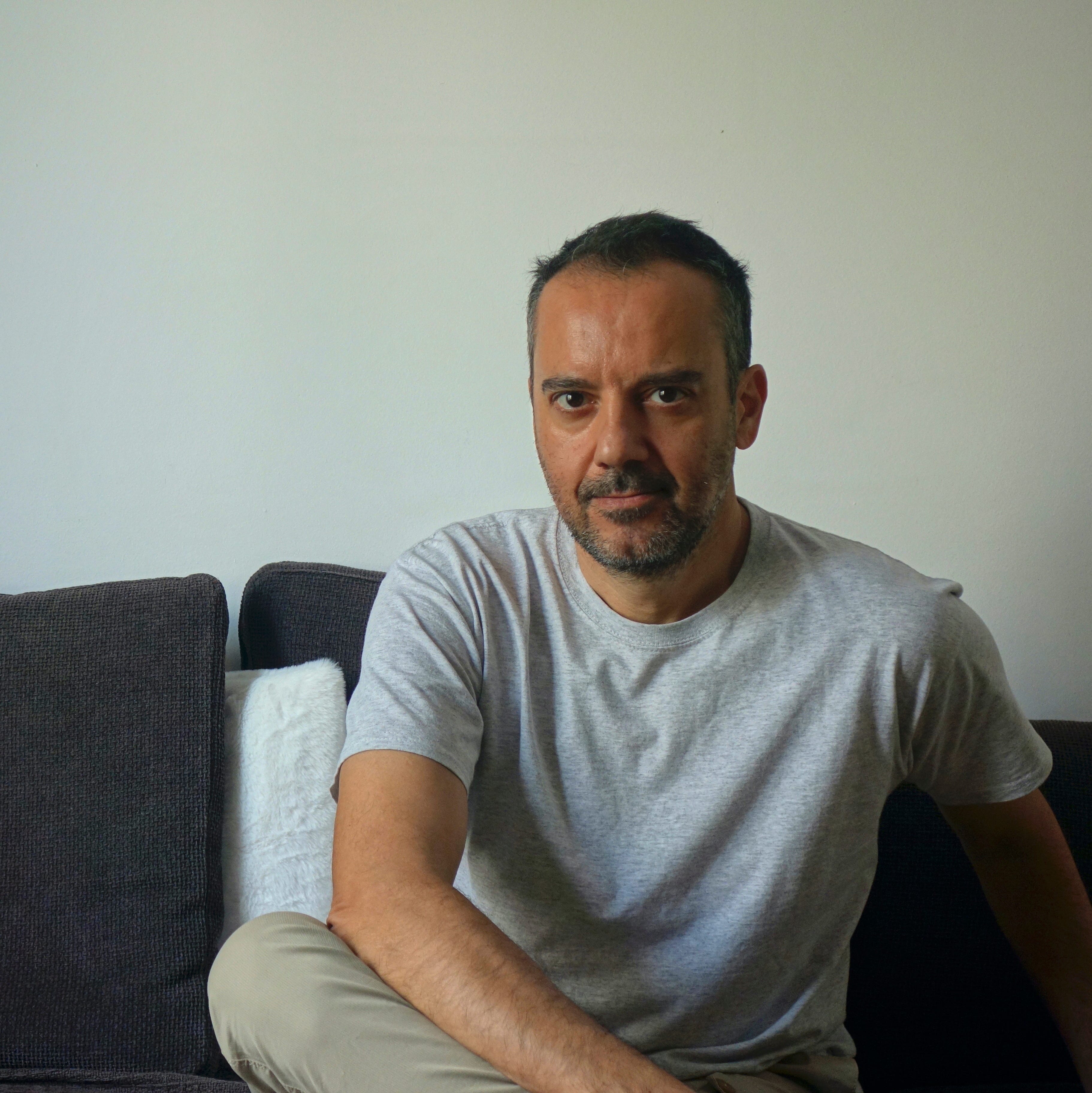
Kostas Tsiambaos is an architect and Associate Professor in History and Theory of Architecture at the School of Architecture of the National Technical University in Athens (NTUA). He studied in Athens (NTUA) and New York (GSAPP Columbia University). He is Chair of do.co.mo.mo. Greece and member of the board of the Hellenic Institute of Architecture (EIA). His research has been published in international journals (The Journal of Architecture, Architectural Research Quarterly, Architectural Histories, APENA Journal of Architectural Research, etc.) and edited volumes. In the fall semester of the academic year 2019-2020, he was a Stanley J. Seeger Visiting Research Fellow at Princeton University. His books include The Architect and the Animal (MIT Press, 2025) and From Doxiadis' Theory to Pikionis' Work: Reflections of Antiquity in Modern Architecture (Routledge, 2018 and 2020).
“Le Corbusier” was the pen name for Charles-Édouard Jeanneret, a play on a family name, Lecorbésier, and “le corbeau,” the crow.
The author of this post is also an alumnus of the Seeger Center.