
'Taiwan Travelogue' and the politics of translation
Lin King on her Booker Prize-winning English version of Yáng Shuang-Zi's novel

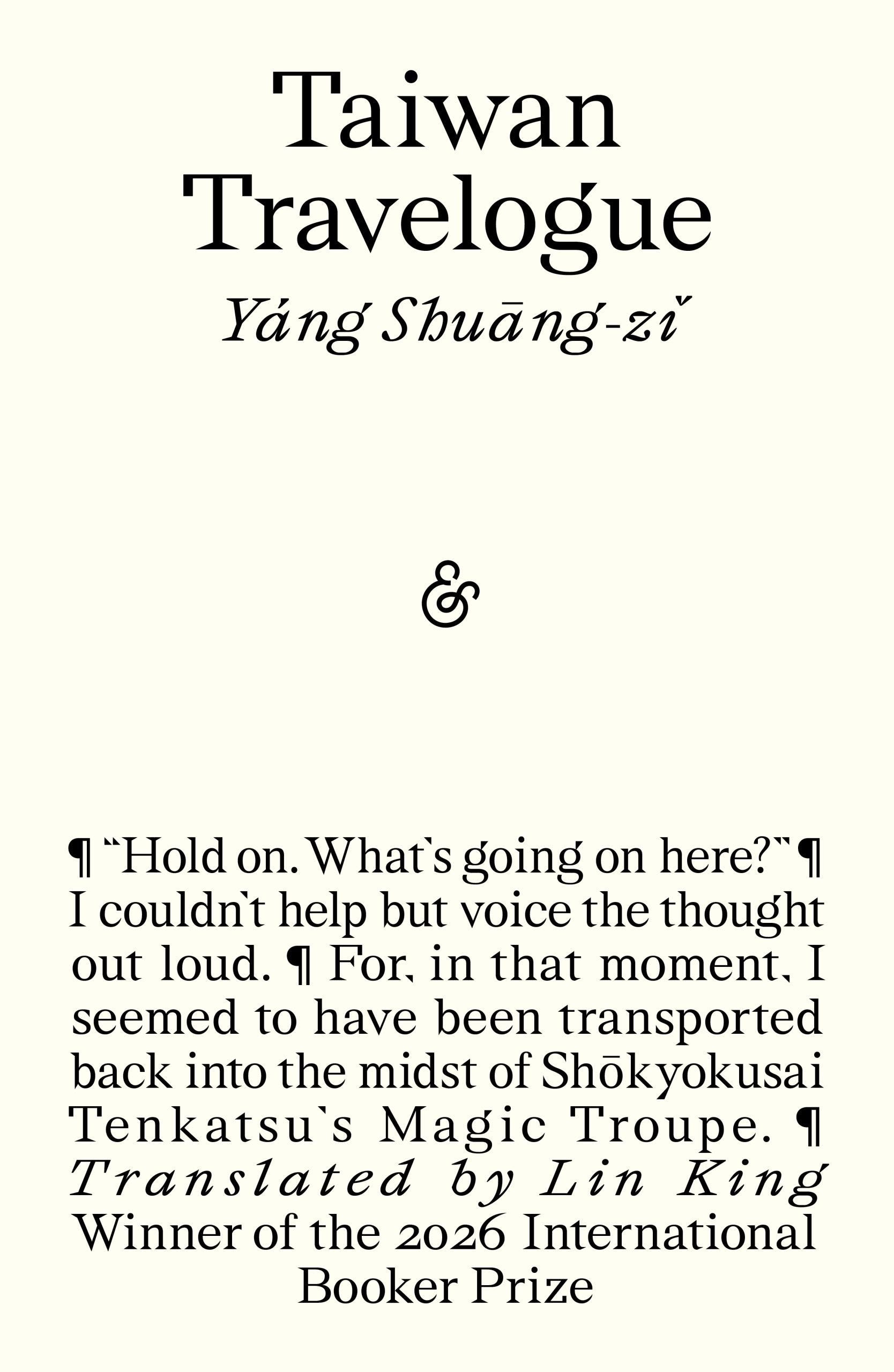
In each installment of The Usonian Interviews, The Usonian spotlights a storyteller from a different corner of the globe. This week, The Usonian speaks with architectural historian Lin King about her English translation of Yáng Shuang-Zi’s novel, Taiwan Travelogue. Told from the perspective of Aoyama Chizuko, a Japanese travel and food writer who visits Taiwan in the 1930s, then a colony of the Empire of Japan, Chizuko eats her way through Taiwan’s cuisine and eventually becomes infatuated with her Taiwanese guide, Ō Chizuru, despite the geopolitical tensions between their two cultures. The novel features several framing devices, as the text was passed in translation from one language to the next; in Taiwan, upon its first publication, the novel was controversially presented as a historical text as written by the protagonist.
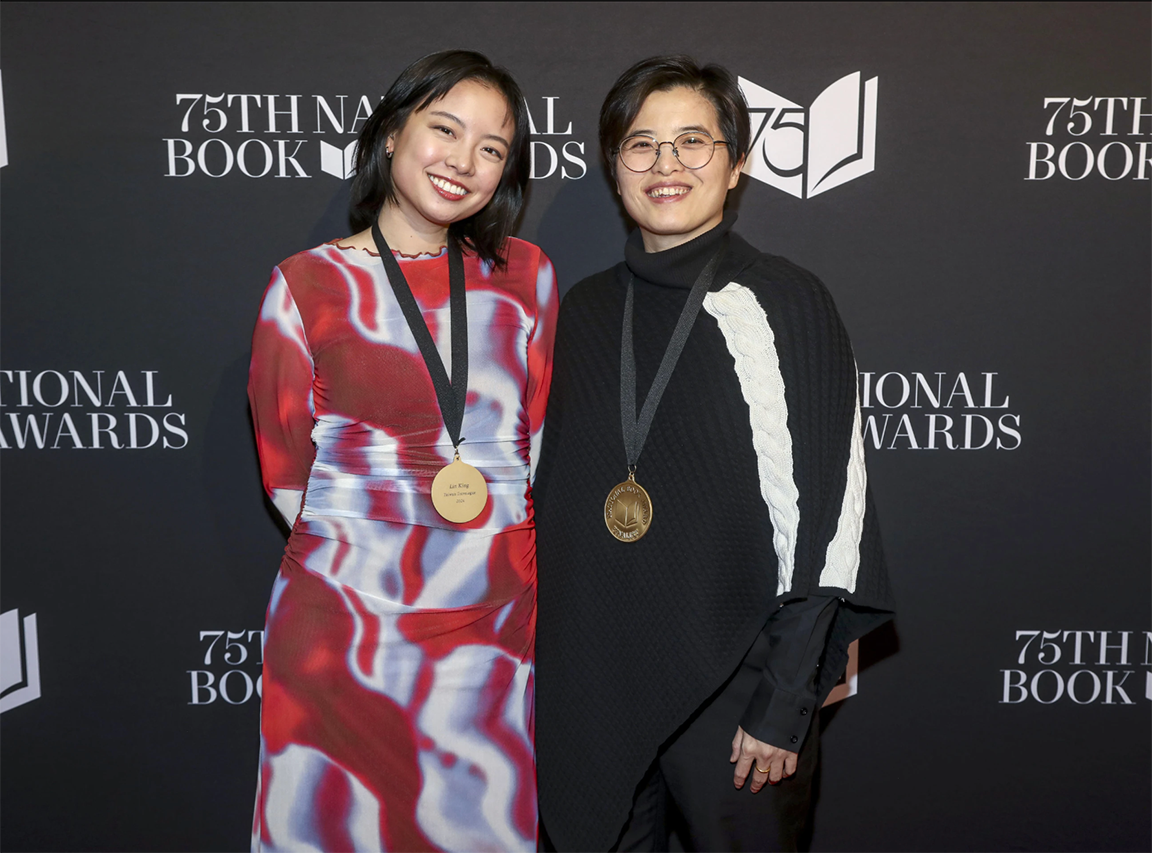
King’s translation won the 2024 National Book Award and in 2026 received the International Booker Prize. Read my previous conversation with King here, and my companion piece about King in Princeton Alumni Weekly.
You can order the book from Graywolf Press, Bookshop, Barnes & Noble, and Amazon.
This interview has been edited for clarity and length. The views presented by the interview subject are the opinions of the subject and do not represent the views of the article’s author or this newsletter. Browse the full interview archive here.
THE USONIAN: This book takes advantage of your multilingual background—being Taiwanese, studying Japanese in college, and beingfluent in English. These are all languages important to this book. Was that a natural fit? I mean, had you heard of this book when it came out?
LIN KING: Since the Republic of China government came to Taiwan after they lost the civil war to the Chinese Communists, they imposed Mandarin education on everyone. People my grandparents’ age would have done the first 10 years of their schooling in Japanese speaking the local Taiwanese language—Hokkien or “Taigi.” And then, all of a sudden, they had to learn Mandarin real fast.
People might not have even known how to pronounce their names in Mandarin, and now it was the standard language. For someone like me, born in the 1990s, all we were taught was Mandarin and some feeble attempts at English or other languages.
So the original work was also written in Mandarin, but it’s understood by the reader that all of the conversations are taking place either in Japanese or in Taigi.
The controversy had initially tricked me. I thought Shuang-Zi had published it as the translator, which is what it said it on the covers—translated by Shuang-Zi and written by this Japanese woman in Taiwan in the 1930. I saw the first edition in a Taiwanese bookstore. And I was like, “Well, I don’t need that, because I can read Japanese if I want to.” And I was happy for Shuang-Zi that she translated it, but I didn’t buy the book at the time.
Later on, I asked Shuang-Zi, if she had any other full-length works that I could work with, because the rights had already acquired for her first novel.
She said, well, what about my book, Taiwan Travelogue? And I was like, “No, I saw it in the bookstore. I was tricked. I didn’t buy it.” And now, I have to read an ebook (which I hate doing).
Even though Yáng Shuang-Zi strongly thinks of herself as a general fiction writer rather than a literary fiction writer (because she came up through fan and internet fiction subcultures), the premise of this book makes it so literary. When I read it, I thought, this was such a rare opportunity for an actual translator, because of the whole meta thing about the author being a translator and having all these footnotes and insertions and these imagined forewords and afterwords—it was perfectly crafted to talk about translation on a meta level, while also following this story about the colonialism of language and culture.
TU: Besides the the colonial historical narrative, there’s also this food history of Taiwan through the book. Were there dishes you didn’t know about, or had to do a lot of research to understand how to explain?
LK: So Shuang-Zi was mixing food that people eat all the time in Taiwan with things that she knew would have been very unfamiliar to the modern reader. And it was part of her effort, as someone who studies cultural history, to preserve some of the culinary history that isn’t widely circulated, that she just wants to disseminate in the public imagination and to immortalize because they seem on the verge of being forgotten or never eaten by anyone.
I’m not a “super foodie” at all. But Shuang-Zi is. That was maybe the hardest part for me—because I knew that so many people would be reading it for the food. It was tough because a lot of the vegetables or herbs that we use in Taiwan aren’t available in the U.S. They’re not grown here.
All the verbs were tough, because pretty much all English culinary verbs are taken from French, such as brulée or julienne.
TU: The novel also has a very leisurely pace. We only have three characters, and the incremental changes in the relationship between Aoyama and Chizuru. How did you modulate your translation, sitting with that pace, which maybe in a Western setting, would demand speeding it up a little bit?
LK: My editor, Yuka Igarashi at Greywolf, and I would discuss whether a scene was serving the story for an Anglophone reader, or is this was sort of a fun aside for a Taiwanese reader that shouldn’t really be here, and so we did take some of those things out. Unfortunately, that did make some Taiwanese readers really mad at me or the English translation.
But these choices were out of real consideration. In the first chapter, it opens as it does in the English edition, but then immediately goes back to Japan and considers Aoyama’s life before she came to Taiwan for a third of the chapter. But we didn’t want this to be a book about Japan. She never goes back to Japan later in the book.
We wanted this to book to be about Taiwan. We wanted to situate people immediately in this bustling market, and avoid this long aside about her life back in Japan.
If there was an aside that wouldn’t be moving or complicating the story in any way, we took those out.
TU: I wanted to ask about the layered footnotes, because there are Yáng’s footnotes; she’s ostensibly the translator from Japanese. And then there are your footnotes, which are explaining the context to the Western audience. How did you come to that strategy?
LK: A lot of people know that modern literary fiction in translation usually does not allow footnotes. We might have them for a classic, but certainly not for contemporary novels. But in the case of this book, the author has written about 1/6th of the novel in footnotes.
It’s sort of a Pale Fire-situation where, if you don’t read the footnotes, then you’re missing the story. I was able to make the argument that in this case, the footnotes obviously have to be preserved, and if that’s the case, rather than pretending that she has come up with the footnotes for the Western reader—since this whole thing is already so layered—we might as well make it clear which footnotes were originally for the Taiwanese reader, and which footnotes are actually meant for the English reader.
And that was, I suppose was another experimental aspect of the book to make the translation and the translators’ presence as ostentatious as possible, to remind people that, of course, all the information that they’re getting is filtered through someone who has thought a lot about what information you might need in order to follow this.
TU: Why are footnotes a faux pas in literary translation?
LK: In Anglophone literature, there’s this conceit that we need to hide the fact that a book is translated and that’s why you don’t see translators’ names on a lot of covers. . But every single word that you’re reading was chosen by the translator. They chose 100% of the words in the book that you’re reading.
There’s this tradition of wanting to erase the translator and wanting to present a book as if it was always written in English, and a double standard toward ‘canonical texts,’ versus contemporary texts. The Odyssey has been translated a million ways, and they’re very different from each other, and people have very strong preferences.
For instance, Princeton always uses Robert Fagles’ Odyssey translation, because Fagles was a Princeton man.
Some schools now definitely prefer the Emily Wilson translation, which aimed to, decenter the Odyssey from masculine, patriarchal values.
For a classical text, we somehow managed to understand this and we ask, Oh, which version of Anna Karenina are you reading?
But for contemporary books by Haruki Murakami and Elena Ferrante, the translators’ names aren’t necessarily on the cover, and I don’t know when that divide came to place or why it’s been so persistent.
Nowadays, there has been a shift toward recognizing the translator, or translators who double as writers, and so they have fans of their own work as writers, who want to read their translations. There are also authors known for translating a language so well and so prolifically that their name becomes a selling point.
More and more publishers are trying to put the name on the cover or the back cover. But footnotes are obviously, if that’s the premise that you’re working with, your footnotes are the needle that pokes the entire bubble. Every time a footnote appears, the illusion of this text being the author’s words has popped.
Because the whole point is that, of course, you’re not—you’re reading something from another culture. There are going to be terms that you don’t understand. Isn’t it more disruptive to have the translator try to explain everything to you in the text itself?
And isn’t that a bigger distraction than if someone had just put in a footnote, and a note so small you can choose not to look at it? If you’re going to read something from another place, you have to accept that they’re going to be things you don’t know.
It’s similar to the divide between people who are willing to watch Netflix shows from another place with subtitles, versus people who listen to the dub.
TU: Why do you think Taiwan Travelogue is resonating so much with readers and these award committees?
LK: On the one hand, the book draws so much attention to the layered facets of putting a book together and translating it.
But on the other, Taiwan Travelogue is a really non-Western take on how to view colonialism. For a lot of the Western world, we’re taught that colonialism and imperialism is bad, full stop.
TU: Aoyama comes to that conclusion belatedly.
LK: Yes, she’s resistant to the Japanese Empire for someone of her time, but she is also beloved by a lot of the other Taiwanese characters. They can see that she’s someone who wants to appreciate the culture and wants to learn about it. But she can’t see the destruction that’s been brought upon Taiwan and I think that’s a part of it, like the road to hell is paved with good intentions. But there was real affection between her and Chizuru.
That rings particularly true in Taiwan, because we’re known for being weirdly affectionate toward the Japanese; they're our closest ally now that the US has totally gone off the rails, and a lot of times, scholars are baffled as to why South Korea and Taiwan react so differently to Japanese colonialism. There are a lot of very complicated reasons for that, but I think the primary one being we had another colonial government [Chinese nationalists, the Guomindang] that took us over from the Japanese, and it took civil unrest and domestic revolt to overcome them and become a democracy—and yet that party [the Guomindang] still exists.
Now, the People’s Republic of China (PRC) is the enemy, and Japan stands in the way between the PRC and Taiwan. They’re our fiercest ally, in that sense, in the current geopolitical landscape. There is a lot of fondness for Japan in Taiwan; to some, Japan is more a home than China.
There is this strange thing where, when talking about these former colonizers, they're actually our friends now. And I guess it’s sort of like the U.S.-UK special relationship. We rebelled against you, but now we’re besties. Except it would be like if the U.S. was still reliant on the UK to fight Russia.
So many of us are glad that we had Japanese infrastructure during the colonial period; now we even have high-speed rail, a system imported from Japan under democratic Taiwan.
TU: You’ve made political decisions about your translations, too.
LK: In 2022, I made a very conscious decision, that I would only translate stories by Taiwanese writers, or just, yeah, writing from Taiwan. Some Ukrainian folks I know feel that they have contributed in some way to Russian dominance, because they’re Russian speakers who weren’t necessarily working on anything that was specific to Ukraine, but generally in the Russian-speaking world.
And I heard people express regret over that and trying to improve their Ukrainian to learn things about their own culture. That really bowled me over. If and when Taiwan is ever in that sort of trouble, I want to know I have done everything that I can—both to understand Taiwan and promote it in the international imagination.
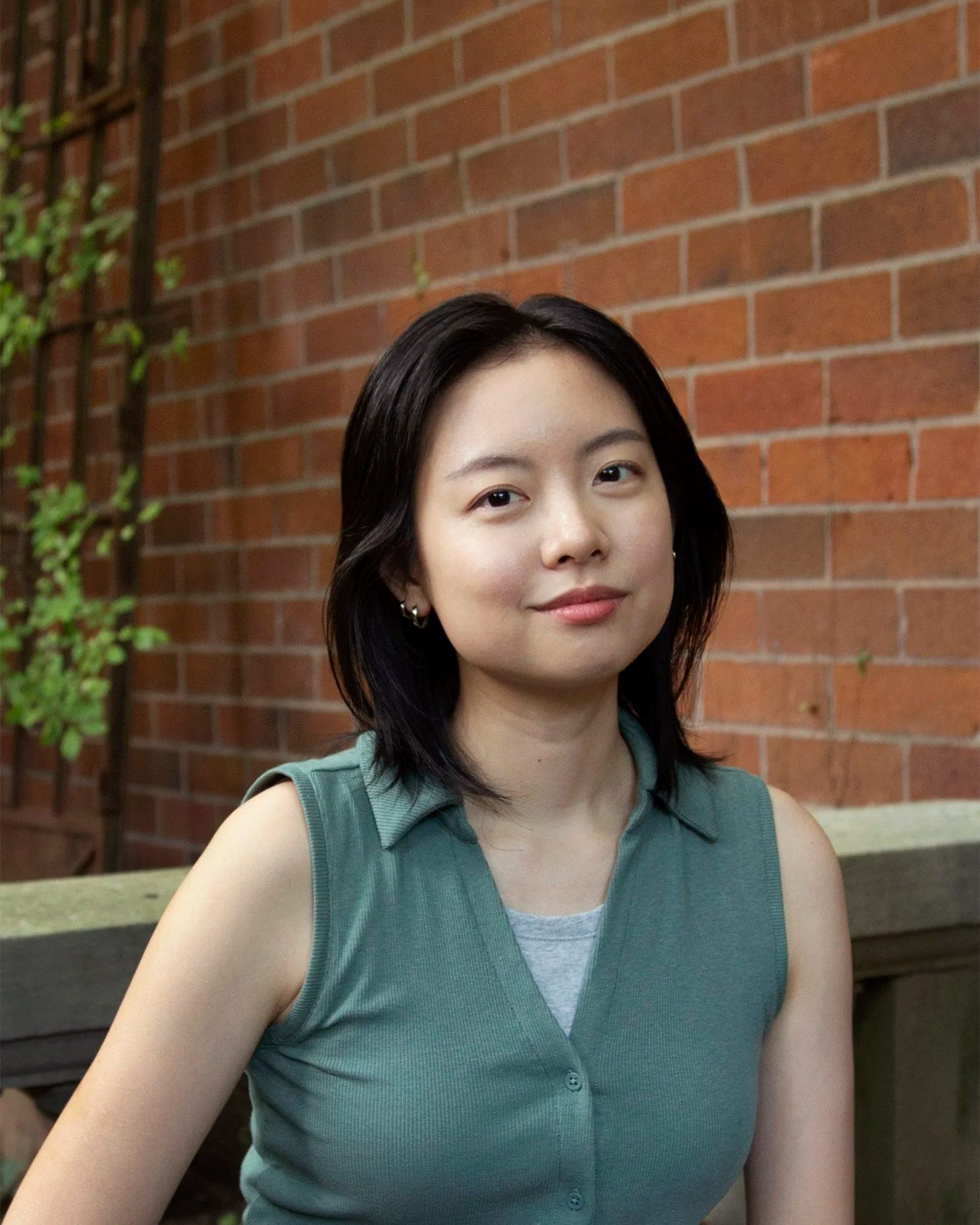
Lin King is a writer and translator based in Taipei and New York. Her fiction has appeared in One Story, Boston Review, Joyland, and PEN America Best Debut Short Stories, among others. Her debut novel, Weeb (Holt US, Head of Zeus UK), is forthcoming April 2027. Translation rights have been sold in Taiwan and Korea.