
Contemplating endless war
On Ali Cherri's film about the Cypriot conflict, "The Watchman"

As I look up, the Middle East is in a renewed round of war yet again, and this time the conflagration has reached all the way to the Eastern Mediterranean island of Cyprus, with Iranian drone attacks on the UK Sovereign Bases in early March.
These bases, typically enlisted by RAF surveillance flights over Gaza and strikes on Iraq, have drawn increased controversy for the Greek Cypriot and Turkish Cypriot communities in Cyprus. However, because their existence is engraved into the 1960 Cypriot constitution, these bases are not going anywhere anytime soon.
In quick succession, two Greek warships were dispatched to Cyprus as a show of force, and at the same time, the Turkish military deployed more F-16s to the “Turkish Republic of Northern Cyprus” (“TRNC”), the unrecognized state in the north of the island, known internationally as the “Turkish-occupied area” and home to most Turkish Cypriots (as well as an estimated 30,000 Turkish soldiers). The move, like that of the Greek ships, seemed to be part of a defensive posture toward Iran.
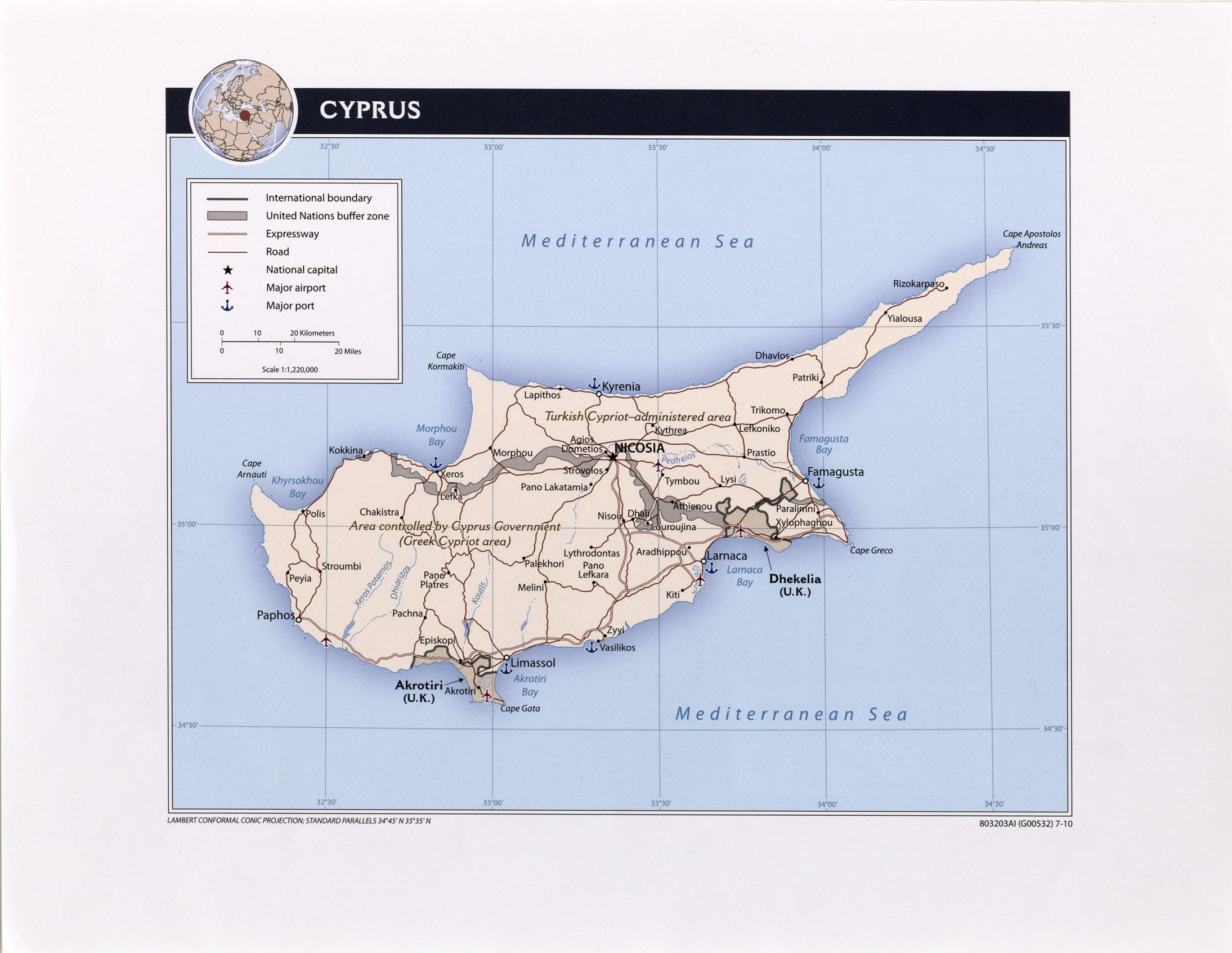
While in this case the moves are arguably defensive, the renewed armament of the divided island—where British forces, United Nations Peacekeepers, the Greek Cypriot National Guard, and Turkish armies are all clustered on a landmass half the size of Connecticut—reflects the ingrained nature of the conflict, a stalemate so broadly accepted that the competing geopolitical interests remain at loggerheads.
Which brings me to my next point. Last month, I had the privilege of seeing a fascinating exploration of this inexorable conflict—and the seeming unending nature of Middle East wars—through an exhibition of Ali Cherri’s 2024 short film “The Watchman”1 at the Giovanni’s Room gallery in Hollywood, California.
Cherri is a Lebanese artist and filmmaker based in Paris whose work, per his website, engages with “geographies of violence.” His film explores the experience of a Turkish soldier on guard in a watchtower of the Green Line outside the village of Lourijina / Akıncılar, a village almost completely surrounded by the Green Line that separates the two sides of Cyprus.2
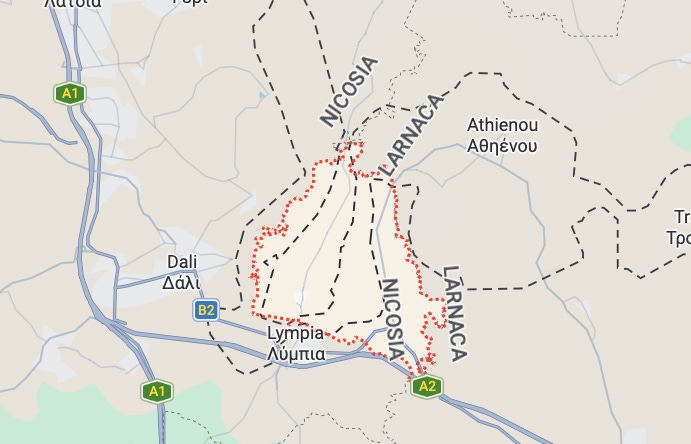
I visited the village in 2022, when I met older Turkish Cypriots at a gas station who were completely fluent in Cypriot Greek; I also attended a festival where I’ve had some of the best baked lamb I’ve ever had.3


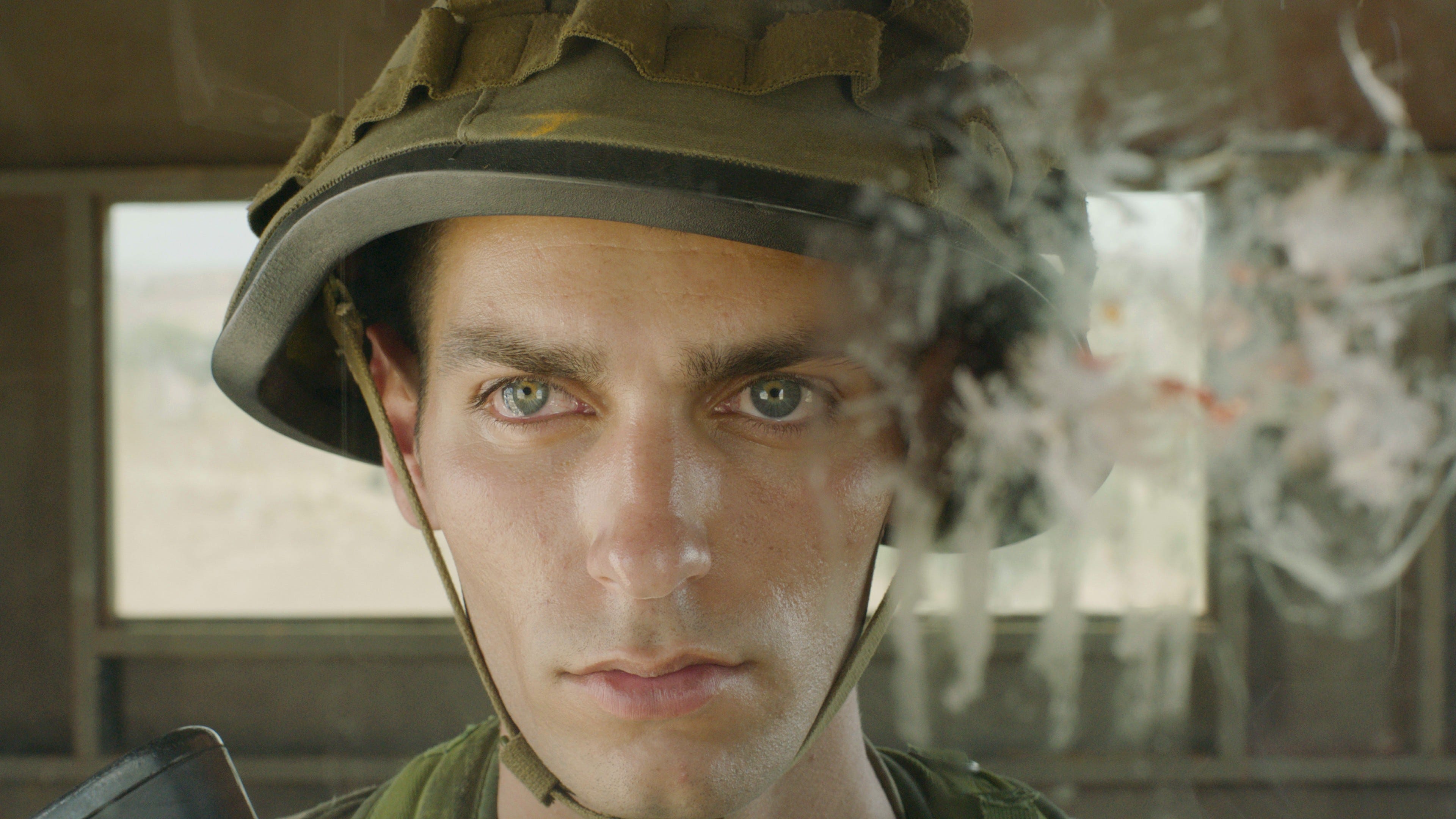
Louroujina / Akıncılar serves as an eerie setting for the film, where the bleary-eyed guard watches the “Dead Zone” in earnest through Cyprus’ hot, oppressive days. On his break, he meets an old woman in the village who tells him about how long the conflict has been going on—a de facto division since 1974, with origins even earlier, during the Cypriot troubles between the two communities in 1963 and 1964.
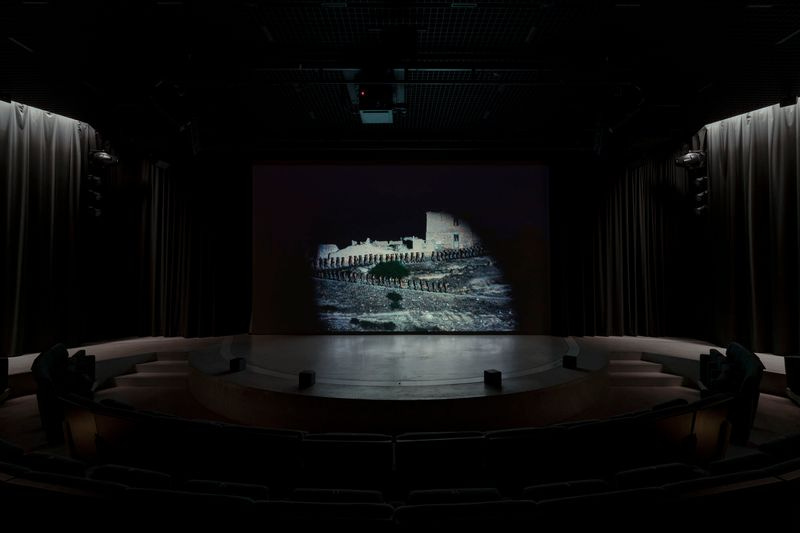
In the night, the guard witnesses mysterious lights along the Dead Zone and though he informs his superiors, they dismiss his reports. As the guard goes to investigate, he is shocked to encounter a troop of soldiers marching along the path. The soldiers, strangely dressed in mid-century uniforms and caked in dust, are not real people, but phantoms. When they reach the soldier, they stop, open their mouths, and emanate a menacing, Lynchian howl.
The film is only a half-hour, but it’s a poignant, magic realist representation of how long this form of conflict has been going on—not just in Cyprus, but across the Middle East. Generations have lived and died, been destroyed or defined by these wars. The Watchman is a singular and insightful way to drive at that truth.
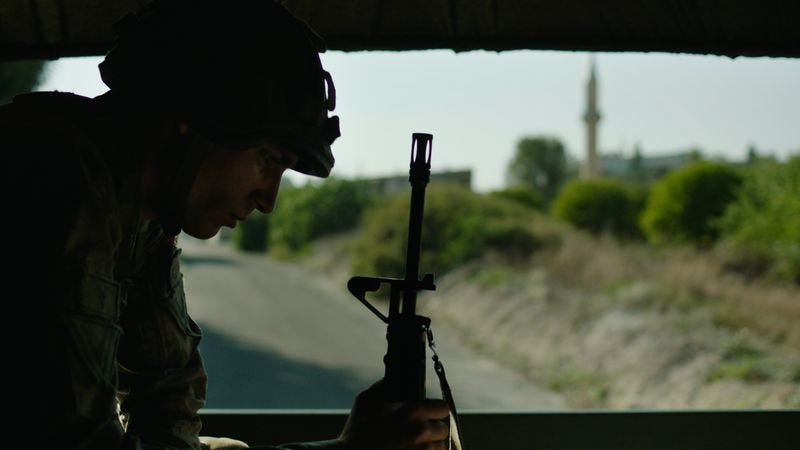
Though “The Watchman” exhibit has concluded at Giovanni’s Room, the film is available on Mubi to stream.
The film’s Turkish title is “Nöbetçi” (translated as “sentinel” or “guard”).
Louroujina (Λουρουκίνα) is the Greek name of the village, Akıncılar the Turkish.
I can’t be made to definitively rate it for fear of offending the restaurateurs and home cooks responsible for the many wonderful other renditions of baked lambs (“kleftiko”) I’ve had in Cyprus and elsewhere.