

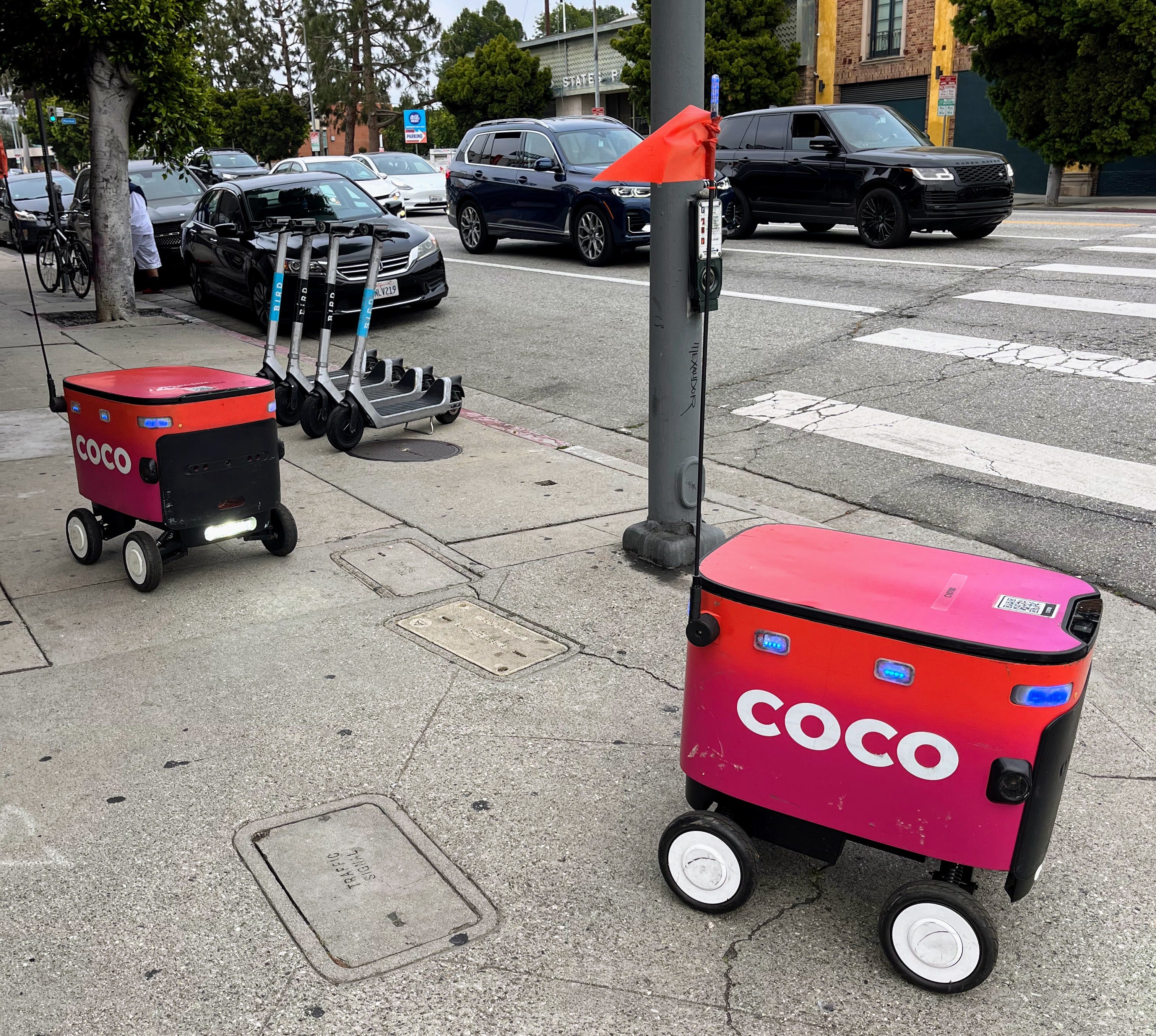
As they zip and bobble down the sidewalk, they turn heads. Little coolers on wheels, food delivery robots from Coco appear like colorful automated coolers, their standard design subconsciously evoking the classic toy little red wagon for Radio-Flyer. The net effect might be—here’s a friendly bot straight out of Pixar’s WALL-E.
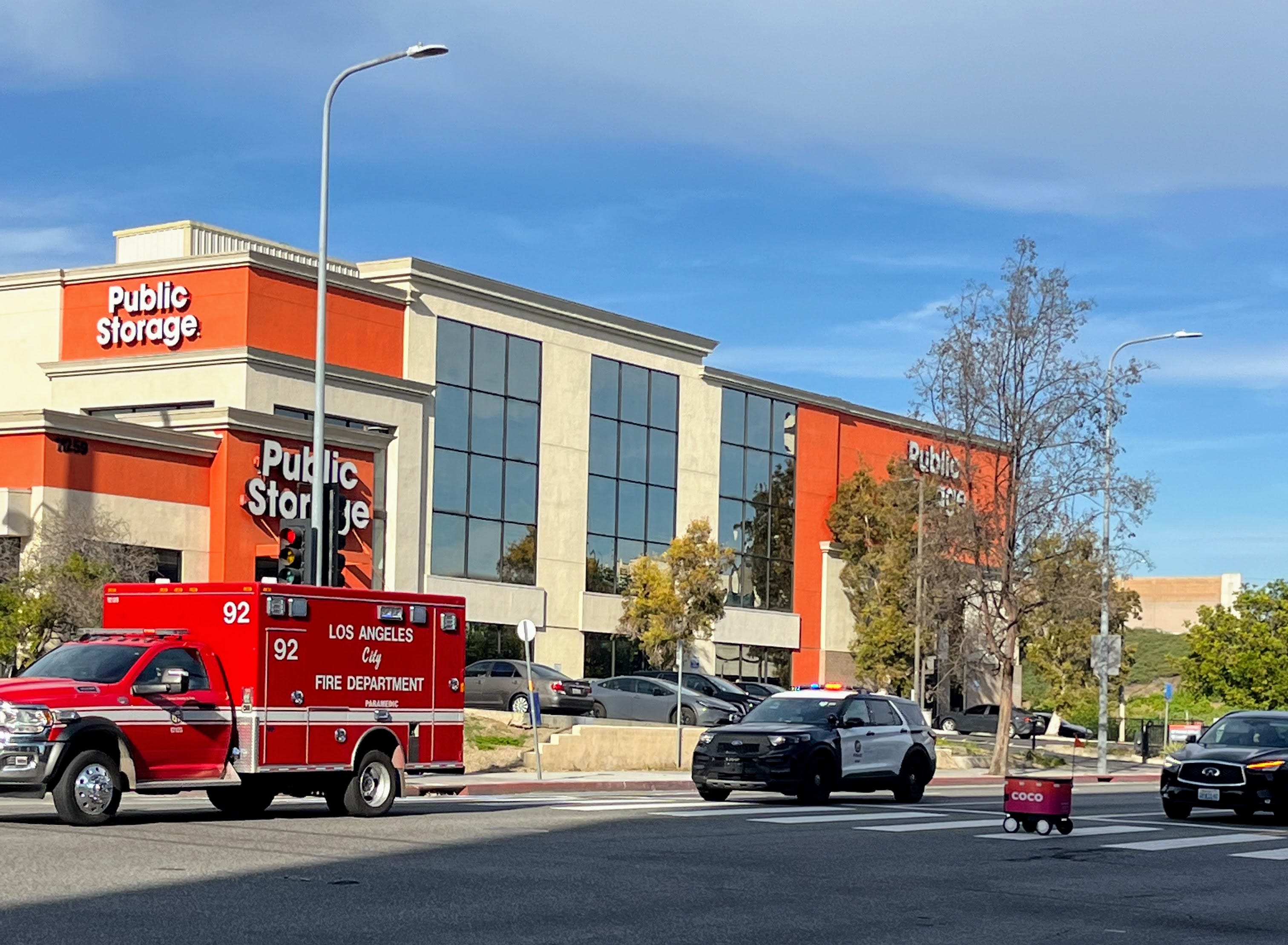
They also can nearly impede first responders. A few months ago, as an ambulance and police car—sirens blaring—advanced along Olympic Boulevard in West LA, motorists pulled over to allow the emergency vehicles to proceed. But the Coco crossing the street? It kept going across a crosswalk — nearly striking the police car as it approached the intersection.
Outside of the radar-spinning Waymo driverless taxis, food delivery robots are the most visible sign of Los Angeles at the forefront of being a Clanker City. But it’s important to note that many of these robots aren’t actually autonomous. Assisted by remote operators, they’re more akin to drones.
That hasn’t stopped the general feeling of amusement around the robots’ whimsical design. Once I encountered a group of children “bullying” a Coco robot, surrounding it so that it could not continue on its journey. (This may be prove to be bad juju for Judgment Day, when Skynet becomes self-aware and the robot revolution commences.)
Some of these robots (including from Coco’s competitor, Serve) feature product placement — topical ads for Prime Video’s apocalyptic video game adaptation Fallout, Netflix’s The Electric State (a sci-fi film about robots), and, well, TNT Sports.
And that ad placement comes with wide coverage. According the Los Angeles Times, Coco has completed more than 500,000 deliveries and plans to expand from its current field of operations in Chicago, Miami, and L.A., launching 10,000 more robots to service in 2026.
But Coco is a L.A.-specific project, founded by a UCLA student in his dorm room, and headquartered in Santa Monica. Notably, Coco robots only have about a 2-mile range, and they partner with specific restaurants that use them as an alternative and supplement to human delivery drivers from DoorDash or Uber Eats.
One wonders if food delivery robots may face the growing pains of other efforts to “disrupt” the sidewalk. When Lime scooters launched in 2018 in Northern Nevada, they were faced with a cease-and-desist for violating state law, and had to pull out of the market. And given Los Angeles’ large unhoused population, it seems like only a matter of time before desperate people start cracking them open for the hot dinners inside.
The frequent obstructions on L.A. sidewalks — like construction and homeless encampments — might also impede Cocos from fulfilling their deliveries. Then there’s the inclement weather that might prevent the success of Cocos in colder climates. But, in a landscape often choked with traffic, there are cases where robots might be speedier on the sidewalks than human-piloted cars on the roads.
If you want to order to receive food from a Coco specifically (as I did for the purpose of this post), that’s a little bit harder. Coco partners with existing food delivery apps like Uber Eats, so you have to select a restaurant that you know uses Cocos, and roll the dice hoping the restaurant will enlist a Coco rather than a human driver. The economic benefit to the consumer (but not to the delivery driver)—is that a Coco doesn’t expect a tip.
For my experiment, I ordered from a nearby burger joint I knew used Cocos, because I had seen Cocos parked outside their storefront.
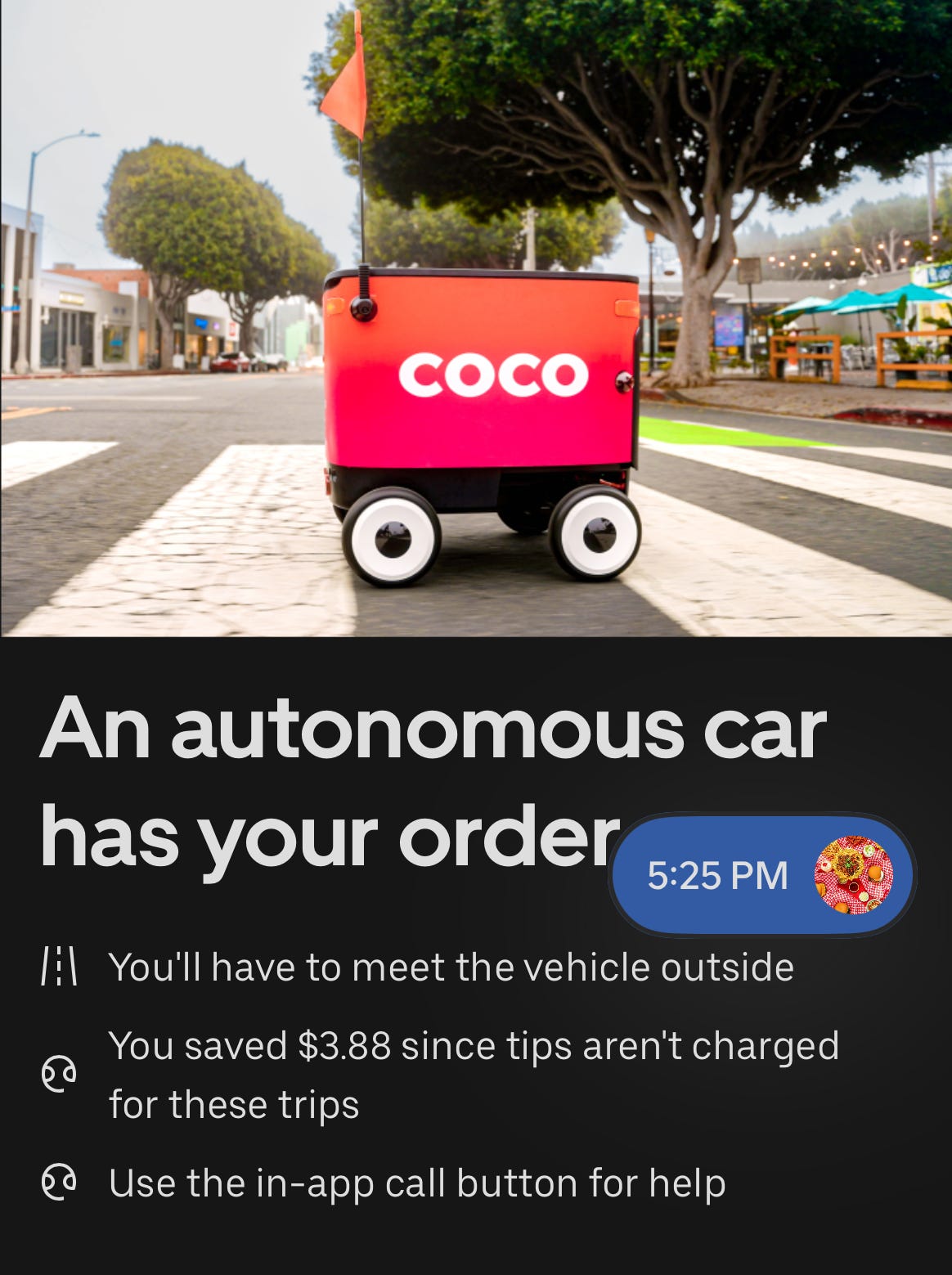
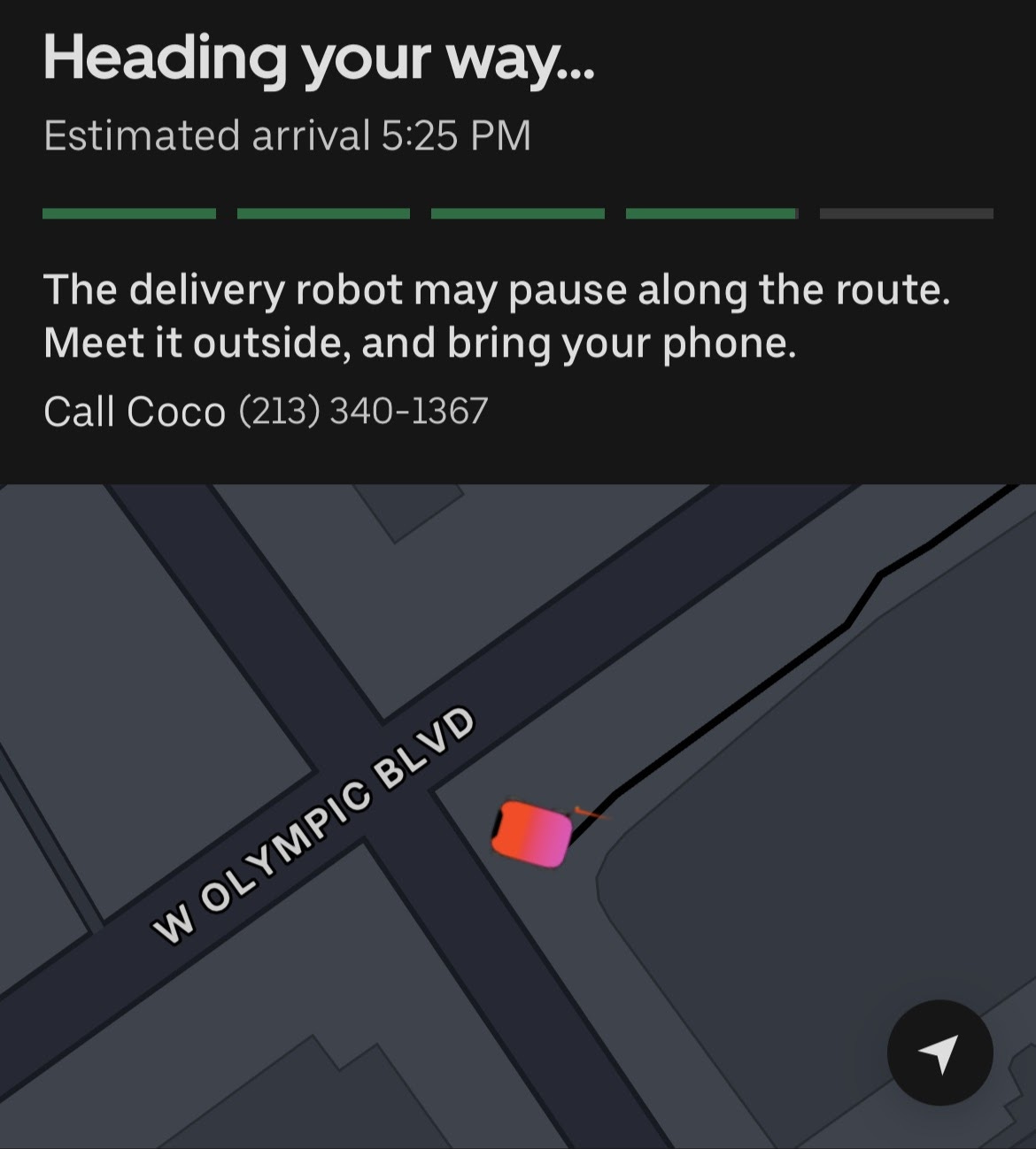
To my great fortune, my Uber Eats order was met with the notification that a Coco would handle my delivery. Like a conventional ride-share situation, the robot’s progress and route were displayed on my phone, as well as its ETA.
When the Coco arrived at my apartment, the app asked you to unlock the Coco by pressing a button. And voila, the Coco’s lid opened, my now-lukewarm burger inside. Once I had done that, the compartment closed and the Coco waited for commands for a moment before it returned, presumably, whence it came.
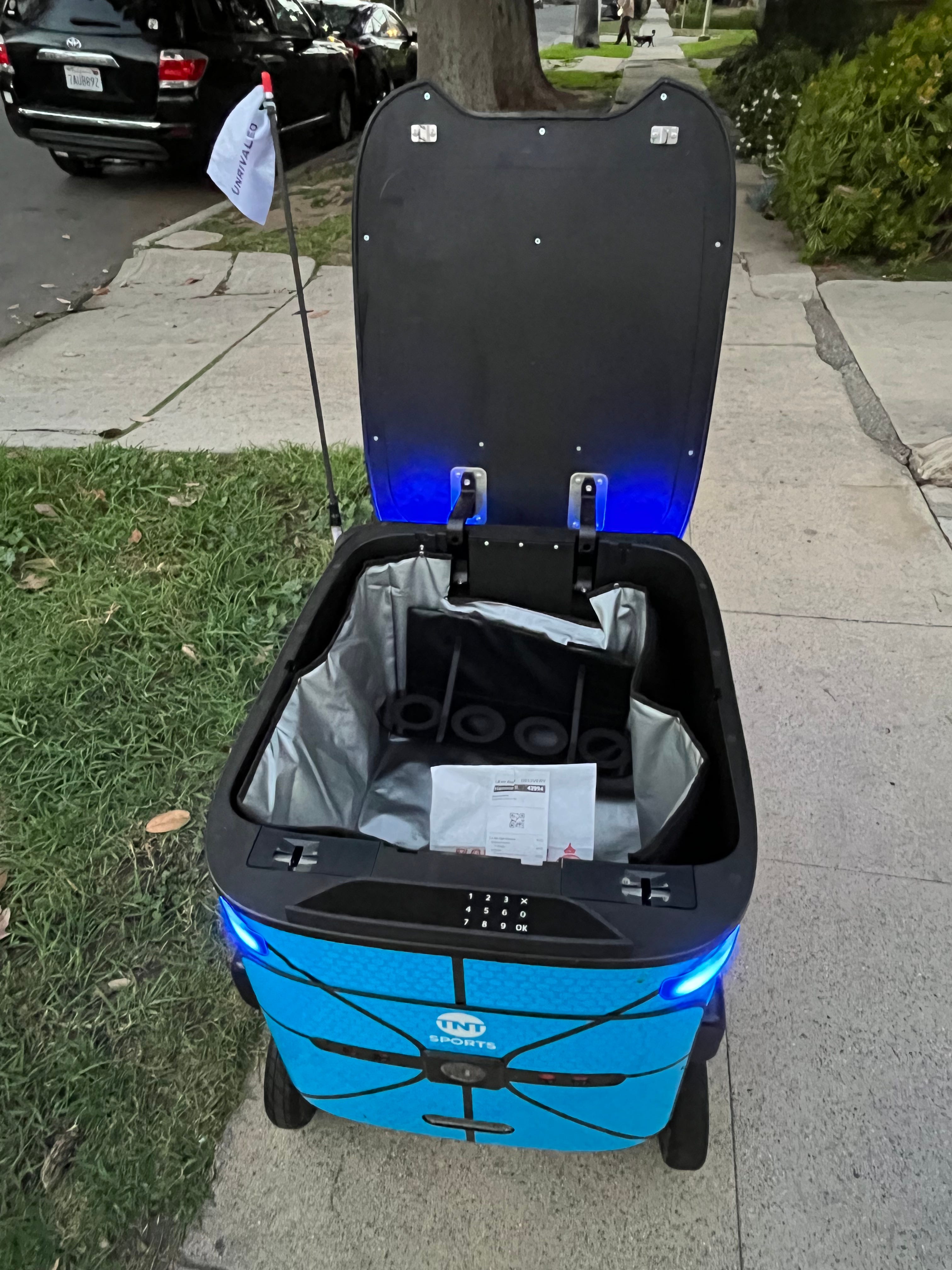
Coco seems to make sense for the college campus market, as the hungry college student might be the most likely customer of fast-food on delivery.
But, not unlike a debate inspired by robotaxis, if we as a society can’t give bad jobs to people (like being an Uber driver), what are the societal costs of automating food delivery? Surely, there must be maintenance teams for the bots and people to clean their interiors when a food container inevitably spills. We may be trading one form of labor for another, with benefits that are hard to perceive.
One thing is for certain. At present time, food delivery bots are not the correct shape to transport a standard-sized pizza. So the pizza delivery guy can rest assured his or her job is safe for at least a little while longer.